

How to Measure the Success of a Bitcointalk Signature Campaign
Published · AB de Royse777
Is your signature campaign delivering useful work and helping your brand become recognized? Learn what evidence to review, what the numbers cannot prove and how to decide your next step.

A weekly report can tell you who participated, which posts qualified and how much the campaign cost. Those records matter. But a business owner usually wants to know something more: is the campaign helping the brand become recognized, trusted and considered when someone needs the service?
I review those questions together, while keeping the evidence separate. A well-managed campaign should demonstrate what was delivered, explain what the community response suggests and give management a sensible basis for deciding what to do next.
This article sets out a practical review process. For help building the budget itself, read How Much Does a Bitcointalk Signature Campaign Cost?
Start with the objective you agreed before launch
“More exposure” is too broad to guide a useful review. Decide what you want that exposure to help achieve. An unfamiliar exchange might want relevant community members to recognize its name and understand the service. A gambling platform might want to establish a consistent presence and give prospective players a public place to ask about its products, payments and support.
Write down the starting position. What discussions already exist? Which questions keep appearing? Are there customer experiences to examine? What other advertising is running? Keep this baseline modest and factual. You do not need to identify anonymous forum users or guess their location. You need a record against which later observations can be compared.
For the wider strategy, see Understand Bitcointalk Marketing.
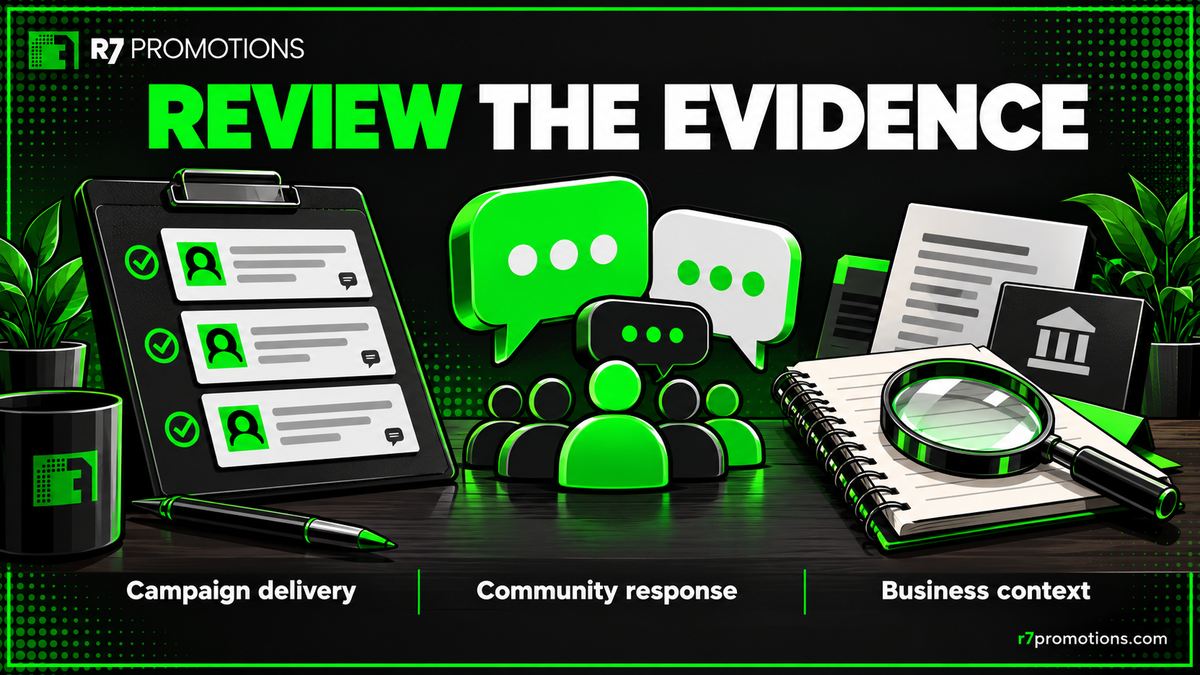
Check whether the campaign is delivering useful participation
Start with the part the campaign manager can directly verify. Are accepted members displaying the agreed signature, avatar and personal text? Are their contributions eligible under the campaign rules? Are payments calculated correctly? Is funding sufficient for the next agreed period?
The weekly report should make those checks understandable. It should distinguish accepted activity from excluded posts, explain important participant changes and record payments and funding needs.
Look at the work behind the totals
A total of eligible posts is more useful when supported by examples. Review whether participants contribute to relevant discussions, understand what they are promoting and meet the agreed quality standard. A higher post count does not automatically mean better advertising. Repetitive or unsuitable participation can undermine the presence you are paying to establish.
These checks establish delivery. They do not establish how many people noticed a signature. Do not multiply posts by a forum traffic estimate to manufacture an impression figure.
Look beyond campaign members for signs of recognition
The next question is whether interest is appearing beyond the people receiving campaign rewards. Useful observations can include unconnected forum members asking informed questions, customers describing firsthand experiences or someone referring another user to the business in a relevant discussion.
Record the date, discussion link and enough context to explain the observation. Where a contributor is a known campaign member or has another disclosed connection, label that relationship. A paid participant answering a question can be valuable support. It belongs in the delivery record. A prospective customer asking that question is a different kind of evidence.
Look for patterns rather than isolated praise
One positive comment is a comment. Several independent discussions over time may provide stronger context, but they still require judgment. Are people becoming clearer about what the service does? Are questions moving from basic explanations to specific features? Do customers return to update their experience?
You cannot reliably classify every anonymous account as independent. State what is known, and leave uncertain relationships uncertain. Avoid presenting a selected collection of compliments as a complete picture of reputation.
Read community responses in context
A campaign does not need an entirely positive discussion to be useful. A question about exchange delays may reveal unclear information. A player's complaint about a withdrawal may identify a support issue. Both deserve attention, even when they make the report less comfortable to read.
Assess what happened next. Did the business acknowledge the concern, explain the relevant facts and follow up? Was the issue resolved, or does it remain unanswered? Keep legitimate criticism separate from spam, repeated unsupported allegations and ordinary requests for help. Do not reduce all of them to a single positive-versus-negative count.
If the same confusion keeps appearing, clarify the announcement or product information. If the problem lies in the service itself, advertising alone will not correct it. My ANN thread launch and management guide explains how to maintain that public reference point.
Review business progress alongside the community evidence
The business should also examine its own performance over comparable periods. For an exchange, that might include completed exchanges, returning customers and contribution after relevant variable costs. For a gambling platform, management might review first-time depositors, returning customers and commercial contribution after applicable costs and bonuses.
These are business-level observations. They do not become campaign-attributed results simply because the figures improved while a signature campaign was active. Record other explanations: a new promotion, a product release, a change in pricing, seasonal demand or another advertising channel.
Voluntary customer answers to “How did you hear about us?” can provide context. They will not capture every influence on a decision, and customers should not have to disclose their forum identity.
Give recognition time to develop
In my experience managing signature campaigns, sustained visibility over months—and sometimes years—helps a brand become familiar within the community. When reliable service supports that familiarity, customers have more reason to feel confident trying the business and returning.
That is why I would not judge a brand-awareness campaign solely on immediate clicks. Equally, I would not use “it takes time” as a reason to avoid reviewing the work. Check delivery from the beginning. Review community response as evidence develops. Examine business progress over periods that make sense for the service, without promising a fixed payback date.
What the SWGT campaign records can - and cannot - show
My SWGT signature campaign case study records 23 campaign weeks between January 22 and July 5, 2024, with a reported weekly budget of $1,000–$1,300.
The public campaign terms described a $40 weekly reward paid in BTC for qualifying Sr. Member-and-higher participants, with a minimum of 20 eligible posts. They also specified branding requirements, constructive contributions and funding updates. Those records give a reviewer concrete things to examine: participation requirements, the payment structure and how campaign delivery was organized.
They do not establish how many readers recognized SWGT, how many became customers or what sales the campaign generated. The reported budget range is not an audited total expenditure, and the recorded campaign weeks should not be replaced with a calculation based on elapsed calendar time.
This is the distinction I want clients to see: a campaign record can support a clear delivery account without being presented as proof of commercial success.
Use a monthly campaign review table
Keep weekly administration detailed. Use a shorter review to bring the important evidence together for management. The following is a suggested review format, not a universal scoring system. Complete it with your own dated records and observations.
| Review area | Evidence to collect | How to interpret it | Possible next action |
|---|---|---|---|
| Campaign delivery | Eligible activity, branding checks, participant changes and payment records | Was the agreed work delivered to the required standard? | Correct checks, resolve payment issues or replace unsuitable participants |
| Community recognition | Dated examples of relevant questions, mentions and customer discussions | Is interest appearing beyond known paid participants? | Clarify the message or examine where participation is most relevant |
| Customer confidence | Firsthand experiences, business responses and unresolved concerns | What reasons are people finding to trust or question the service? | Improve information, support or the underlying service |
| Business progress | Comparable customer, transaction and contribution figures | Is the wider commercial position improving, considering other influences? | Maintain the plan or investigate what is limiting progress |
| Funding and next steps | Available funds, planned costs and outstanding actions | Can the business sustain the agreed work and act on what it learns? | Agree the next funding period and specific improvements |
Keep supporting links and detailed records behind the summary. A client should be able to inspect how a conclusion was reached.
Use the same definitions between reviews. If you change what counts as eligible activity or how a business figure is calculated, explain the change before comparing periods.
Decide what to continue, improve or expand
A review should end with a decision and a reason.
Continue when delivery is reliable, the audience remains relevant and the business can sustain the agreed plan. Early evidence may justify continuity without yet establishing commercial payback.
Improve when the records identify a specific weakness. That could mean clearer campaign messaging, stronger participant selection, better ANN support or changes to the customer experience.
Expand cautiously when the existing campaign is operating well and there is a clear purpose for additional spending. Increasing the roster should answer an identified need rather than simply make the report look bigger.
Pause or reconsider when funding is uncertain, persistent service problems remain unresolved or the campaign no longer fits the business's priorities.
Record the next action, who is responsible and when it will be reviewed. That turns reporting into management rather than a repeated summary of the previous week.
Frequently asked questions
Are eligible posts a measure of campaign success?
They are evidence of delivery under the campaign rules. Their relevance and quality matter, but they do not establish readership, customer confidence or sales.
Should I use clicks as the main performance measure?
No. A signature campaign can influence someone who later visits directly or researches the brand elsewhere. Any available click information provides limited context; it should not lead a brand-awareness review.
How soon should I review the campaign?
Check delivery and funding every campaign week. Agree broader review intervals before launch. A monthly management review is a practical option, while commercial evaluation may need longer comparable periods.
Does more discussion mean a better reputation?
Not automatically. Examine who is contributing, what they are discussing and how the business responds. Increased discussion can reflect interest, confusion or unresolved problems.
Can a signature campaign guarantee increased sales?
No. It can support recognition and create opportunities for people to learn about a business. Customer confidence and commercial results also depend on the service, market conditions and other influences.
Review your campaign with R7 Promotions
I manage the work behind a signature campaign: participant coordination, activity checks, reward calculations, funding communication and reporting.
The purpose is to give you a clear account of what your budget supported and a useful conversation about what happens next. My Signature Campaign Management service and campaign portfolio show how I approach that work.
Let's discuss your campaign, what you want it to achieve and the evidence we should review together.